
The Benefits of Tai Chi
Prevention Comes First
Tai Chi is based on the principles of Ancient Chinese Medicine. The Neijing, or Yellow Emperor’s classic of internal medicine, says: “Don’t sharpen your knife on the way into battle, or start digging a well when you feel thirsty.” The basic principle is preventative medicine. Rather than treating specific illnesses with drugs or surgery, as Western medicine does, Tai Chi seeks to improve the functions of the internal organs and the flow of Qi, or life force, around the body.
Building a Store of Qi
Building up a good store of Qi is seen as the best way to stave off illness and old age, and to keep the body young, flexible and full of energy. The body also regenerates itself. If you cut your finger or break a bone, it heals without any medicine, because the body is constantly replacing and renewing its own parts. This is well known even in modern Western medicine.
Blockages and the Flow of Qi
In Chinese medicine, illness is seen as the result of blockages in the flow of Qi, or life force. Tai Chi exercises improve the flow of Qi and blood around the body. This rejuvenates the internal organs and keeps them working at maximum efficiency, so that the whole body is supplied with Qi.
What to Expect in a Tai Chi Class
Two Forms
Lee style Tai Chi has two forms. The first is the Tai Chi dance, or Tiao wu 跳舞, which has been popular since the sixteenth century. The second is a much older form, the Tai Chi form, first practised by Ho Hsieh Lee as eight basic stances in the Zhou dynasty of 1000 BC.
Partner Exercises
As well as the forms, there are partner exercises such as Yifu shou 依附手 (sticky hands), whirling hands and whirling arms. They teach the basic principles of self-defence, develop balance and sensitivity, and show how to use softness to overcome physical strength.
A Typical Class
A typical class, as taught by Chee Soo, lasts ninety minutes.
Warming Up and Deep Breathing
The class starts with warm-up exercises, followed by a deep breathing exercise that activates the dantian. This is an energy centre in the lower abdomen where Qi, or life force, is stored.
Kai Men Qigong
Next comes the Lee style of qigong, Kai Men, which means “open door”. It is a series of relaxed exercises that use deep breathing to open the body’s energy channels in preparation for the Tai Chi exercises.
The Tai Chi Dance
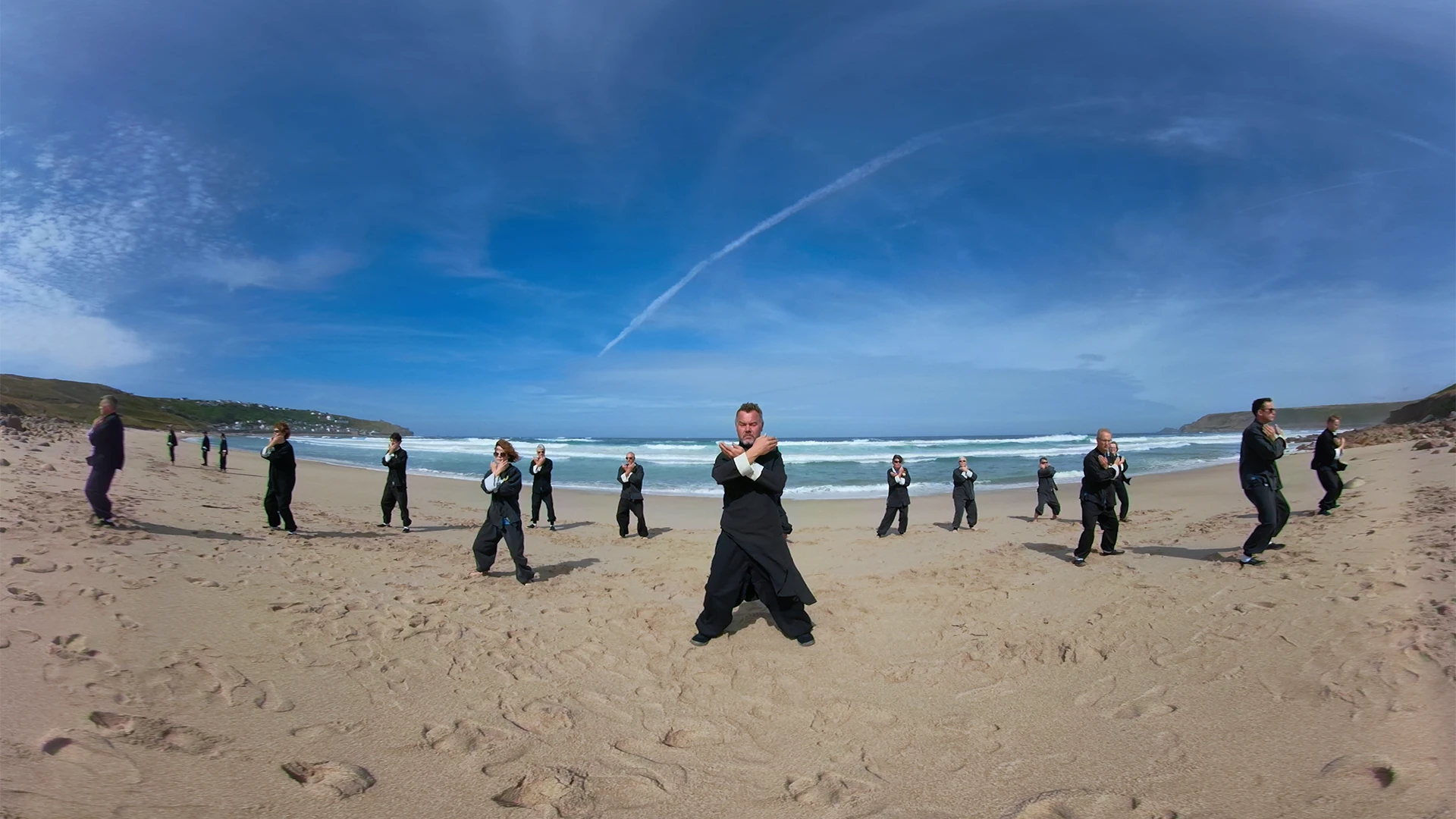
Once the energy is activated, we practise the Tai Chi dance, which gets energy flowing around the system. It is a loose, relaxed form that emphasizes flow.
Partner Exercises and Li Energy
In the middle of the class we usually do partner exercises such as sticky hands (Yifu shou 依附手), followed by other partner exercises that teach you to use Qi instead of physical strength and movement. Other exercises develop your awareness of Li, or macrocosmic energy. This is a universal energy field that flows through the body but comes from the Universe itself and is all around us. It can be used to supplement your store of Qi, or personal life force.
The Tai Chi Form and Closing Exercise
Towards the end of the session we usually practise the Tai Chi form, a slower and more concentrated type of moving meditation. We always finish with the Five Lotus Blossoms Qi cut-off exercise, which returns the energy to the dantian, where it is stored until the next time you need it.