
Chee Soo and the Leamington Tai Chi Club
Chee Soo founded the Leamington Tai Chi club in 1982, and it has met without a break ever since.
For sixty years Chee Soo learned and taught the Taoist Arts of the Lee style. He came from one of the earliest Taoist Arts schools in the West, founded in 1930s London, and he gave his life to teaching others. He taught all over the world, and his groundbreaking books on Taoist methods became best sellers in many languages. He was best known for the soft, internal martial arts, but he also helped many people through his healing work and his deep knowledge of Ancient Chinese Medicine. T’ai Chi Ch’uan was his favourite way of putting Taoist philosophy into practice.
Early Years
Chee Soo was born on 4 June 1919 in All Souls, Marylebone, London, and his English name was Clifford Gibbs. His father, Ah Chee Soo, was a pastry chef at a Westminster restaurant, and his mother was Beatrice Gibbs. In a 1977 LBC radio interview with Bran Hayes, he said that at fourteen he met an elderly gentleman from Weihaiwei called Chan Kam Lee in Hyde Park. In the summer of 1934 Chan Lee invited him to his class, and his Taoist arts training began. Chan Kam Lee took him on as a nephew and taught him whenever work and time allowed.
Wartime Service
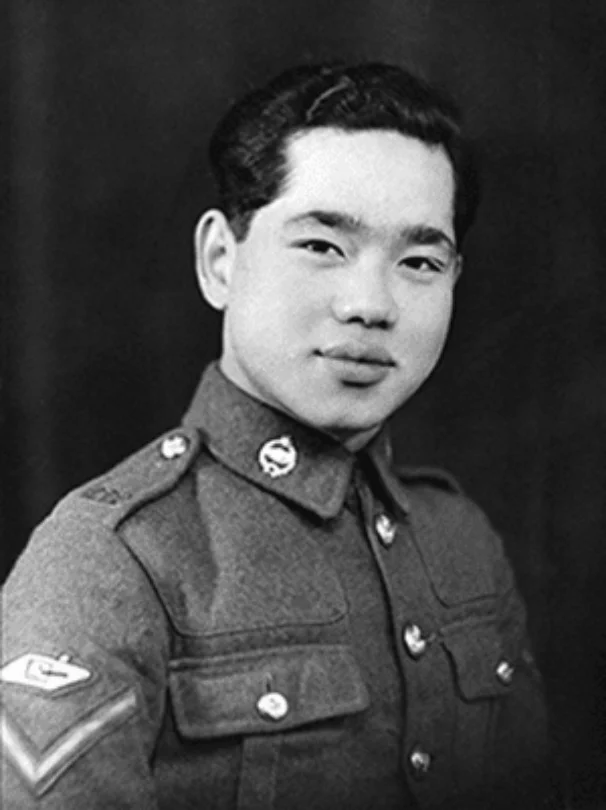
In 1937 Chee Soo joined the 2nd Battalion of the Royal Tank Regiment, part of the 7th Armoured Division later known as the Desert Rats. He served in northern France and at Dunkirk, then went to North Africa. There he was mentioned in dispatches and received the Military Medal after the Battle of Beda Fomm in Libya in February 1941, part of Operation Compass. He was promoted to Corporal in 1941 and to Acting Sergeant in 1942. His regiment was then sent to Burma, where he served as a tank commander. On 19 April 1942, during the Battle of Yenangyaung, the Japanese took him prisoner.
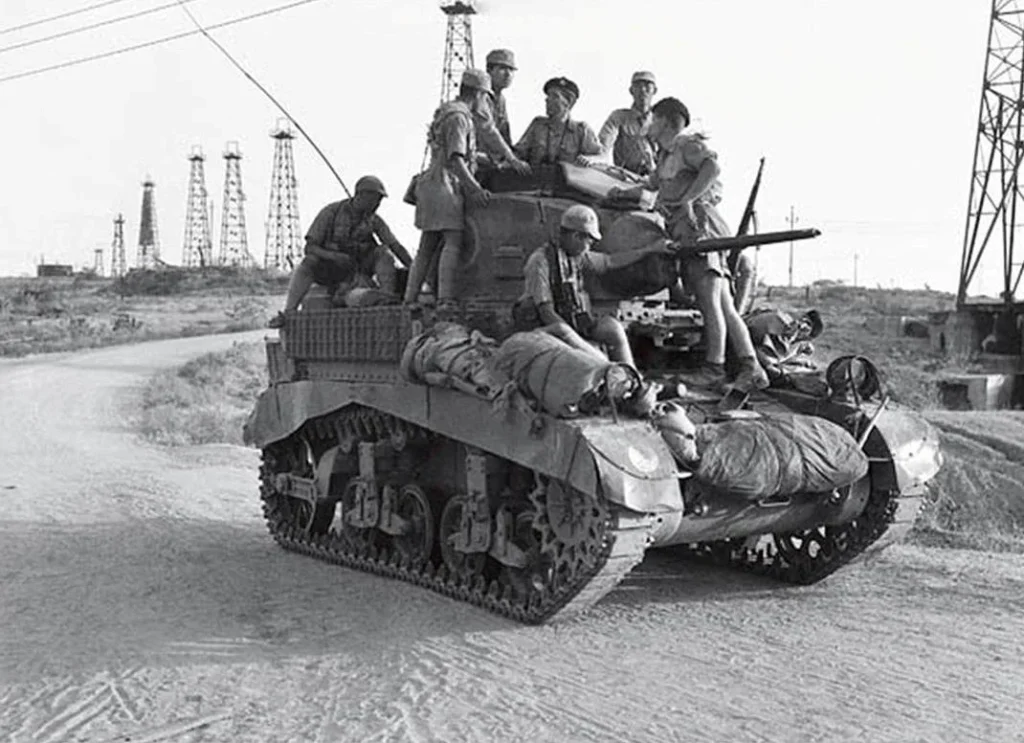
As a prisoner of war he suffered beatings, torture, hunger and punishing labour, including work on the Burma Death Railway, and he caught malaria. About three years later, as the Japanese fell back before the Allied advance, he escaped into the Shan Mountains. He spent a month crossing harsh jungle country before an American guerrilla patrol rescued him. He weighed only 84 lbs. After three months of treatment and recovery he was flown home to England and his wife. He was later listed as a war crimes witness.
After the War
After leaving the forces, Chee Soo trained in book-keeping, stock control, commercial history and sales promotion. Once the war was over he found Chan Lee again, and the Holborn class started up once more. In 1950 he opened his own class at Manor Road School in West Ham, East London.
The author Rupert Croft-Cooke, a friend of Chee Soo’s from 1938, recalls this period of his life in his book The Dogs of Peace:
Clifford Gibbs had got his rather grand name from Dr Barnardo’s Homes, for he had been reared in one of these, the son of a Chinese father and English mother, neither of whom he had ever seen. I had known him before the war and was as proud as he was of the Military Medal he had earned as a Corporal in the Royal Armoured Corps in North Africa. He had been sent to Burma and taken prisoner by the Japanese, and suffered unspeakable tortures and humiliations because of his race, separated as he was from his fellow British. He had survived and, inwardly as inscrutable as a Conrad character, a little like Wang in Victory, he had married a blonde English girl and had an exquisite baby daughter whose godfather I became at a Sunday afternoon service in an East End Anglican church. Clifford, who went about life methodically, was severely industrious and found the means of saving for his family even in those days of grudging wages. But he had a humorous cheerful side to his character and enlivened my flat during his weekly visits between office hours and his return to Durban Street, E.15. He was an expert wrestler and had earned the Judo black belt. Only from the depths of his character emerged sometimes the exotic or oriental; in speech and manner he was very much an Englishman, and it was strange to hear from his curved lips words that might have been used by any London ex-soldier. I am glad to have had his friendship throughout those years.
Rupert Croft-Cooke, The Dogs of Peace
Teaching the Taoist Arts
Chan Kam Lee died in the winter of 1953, and Chee Soo went on to become President of the International Taoist Society. He taught a wide range of Taoist arts, from self-defence to healing and spiritual disciplines rooted in Chinese Medicine, Qigong and meditation. In the 1970s he also ran a Chinese health and herbal clinic in London.
A British Movietone News film shot in Guildford, Surrey, on 21 May 1970 reported that Chee Soo had over 2,000 students learning Wu Shu in Britain through the British Wu Shu Association. It also said he was one of only three men outside Beijing qualified to teach it.
On Screen and On Air
- 1965 – The Avengers: According to Guinness World Records, Dame Diana Rigg became the first Western actress to perform kung fu on television after Chee Soo and fellow fight choreographer Ray Austin added it to her fight scenes. The certificate was presented on The New Paul O’Grady Show.
- 1973 – BBC Nationwide: In a live studio interview with Bob Wellings on 21 September, Chee Soo demonstrated kung fu self-defence and inner power. He also talked about the history of kung fu, the differences between Northern and Southern styles, and how kung fu differs from karate.
- 1975 – BBC Schools: The BBC filmed his Feng Shou kung fu class at Seymour Hall, London, for the schools documentary Scene: Looking for a Fight, which compared his soft-style self-defence with boxing and hard-style kung fu.
- 1977 – LBC Radio: Talking with Brian Hayes, he discussed Lee style T’ai Chi Ch’uan, meeting his teacher Chan Kam Lee, reincarnation, and how women would one day rule the world.
Coventry Years and Taoist Books
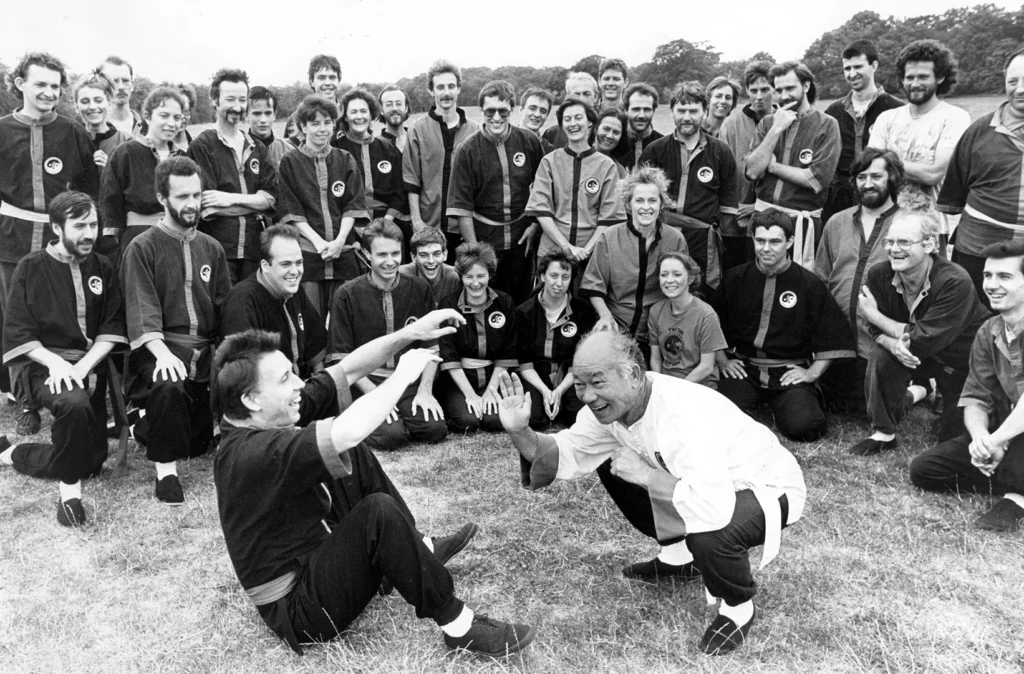
In the 1980s Chee Soo moved to Coventry, where he wrote and taught courses in Lee style Tai Chi Chuan, Feng Shou Kung Fu and Ancient Chinese Medicine. He taught at Alderman Callow School (now The Westwood Academy) and at venues across Britain, and he visited students in Australia and Europe. He wrote five books during his lifetime, and one more on Taoist philosophy was published after his death.
His books first came out in hardback from Gordon and Cremonesi, Heather Gordon’s publishing house. Aquarian Press then reissued them in paperback, and they became international best sellers under Thorsons and later HarperCollins. They were translated into Portuguese (Brazilian), Polish, German, French, Indonesian, Spanish and Italian. All of his titles have now been republished by Seahorse Books in their original Aquarian Press format and are available from the Seahorse Books website.